AI IN SOCIAL MEDIA MARKETING
AI IN SOCIAL MEDIA MARKETING
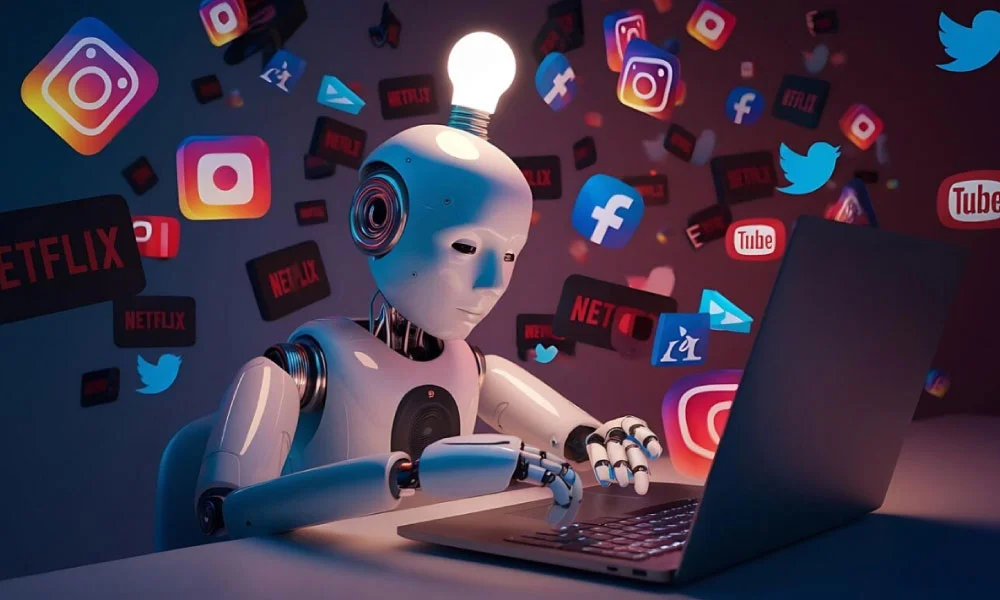
Artificial Intelligence (AI) has become a powerful force transforming how businesses plan, execute, and optimize their social media marketing strategies. Here’s a detailed overview of how AI is used, its benefits, and real-world applications:
1. Content Creation and Curation
AI tools can generate and recommend engaging content for various platforms.
-
Examples:
-
ChatGPT and Jasper AI help write captions, blog posts, and ad copy.
-
Canva’s Magic Write uses AI to generate creative text and design suggestions.
-
AI algorithms recommend trending topics, hashtags, and optimal post formats.
-
Benefit: Saves time, ensures consistency, and boosts engagement through data-driven creativity.
2. Predictive Analytics and Consumer Insights
AI analyzes vast amounts of social data to predict consumer behavior, interests, and trends.
-
Examples:
-
Brandwatch, Sprout Social, and Hootsuite Insights use AI to analyze audience sentiment and engagement.
-
Predictive models identify which posts are likely to perform best.
-
Benefit: Enables smarter content planning and audience targeting.
3. Personalization and Targeted Advertising
AI powers personalized marketing by analyzing user preferences and engagement history.
-
Platforms like Facebook Ads, Instagram, and LinkedIn use AI to automatically optimize ad delivery.
-
Dynamic creative optimization (DCO) personalizes ad content for each viewer.
Benefit: Higher ROI and improved conversion rates through relevant ad targeting.
4. Chatbots and Customer Interaction
AI chatbots handle inquiries, feedback, and customer service directly on social platforms.
-
Examples:
-
Meta’s Messenger Bots and ManyChat respond to customer queries 24/7.
-
AI-driven bots can recommend products or guide purchases.
-
Benefit: Enhances customer satisfaction while reducing operational costs.
5. Sentiment Analysis and Brand Monitoring
AI systems analyze comments, mentions, and reviews to gauge public perception.
-
Tools: MonkeyLearn, Lexalytics, Brand24.
-
Detects crises early and helps manage brand reputation.
Benefit: Allows businesses to respond quickly to negative sentiment and capitalize on positive buzz.
6. Influencer Marketing Optimization
AI identifies ideal influencers based on engagement metrics and audience demographics.
-
Tools: Upfluence, CreatorIQ, HypeAuditor.
Benefit: Ensures partnerships are authentic and data-backed, maximizing campaign impact.
7. Automated Scheduling and Performance Tracking
AI optimizes posting times and measures campaign performance automatically.
-
Tools: Buffer, Later, HubSpot AI.
Benefit: Increases efficiency and ensures content reaches the right audience at the right time.
8. Visual Recognition and Trend Forecasting
AI can recognize images, logos, and brand appearances across social media.
-
Example: AI detects brand mentions in user-generated photos or videos even without tags.
-
Tools use visual data to spot emerging trends or viral content patterns.
Benefit: Offers deeper insights into how consumers visually engage with brands.
9. Ethical and Strategic Considerations
While AI brings efficiency, marketers must use it responsibly.
-
Avoid over-automation (retain human creativity).
-
Ensure data privacy compliance (GDPR, etc.).
-
Maintain transparency in AI-driven content.
Conclusion
AI revolutionizes social media marketing by combining automation, personalization, and analytics. Businesses that embrace AI can gain a competitive advantage through smarter decisions, deeper insights, and stronger engagement with their audience.
compiled by
mamta bisht(data scientist)


Comments
Post a Comment